How to Travel With Medication: Packing, Paperwork and Time Zones
5 min
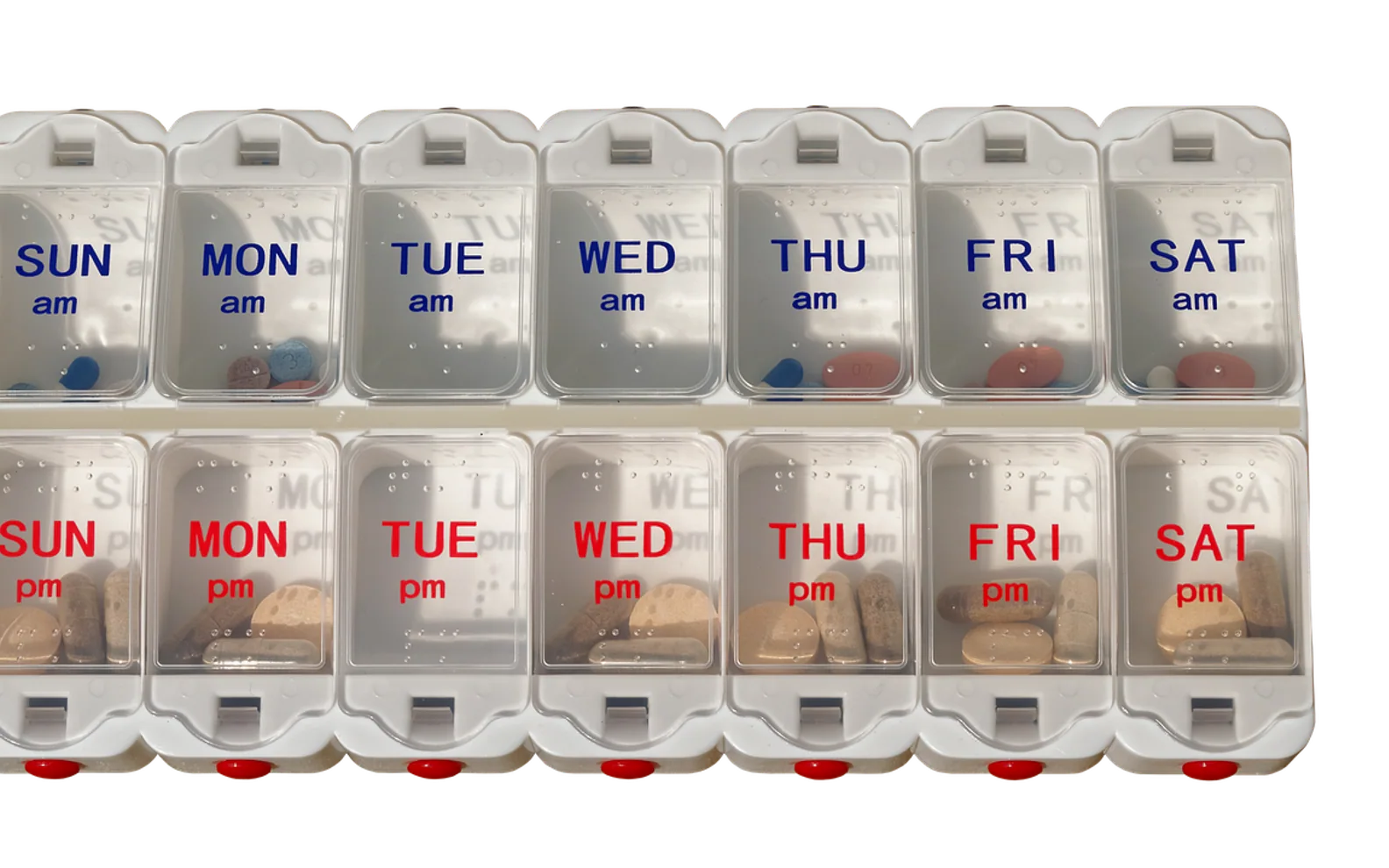
The suitcase is zipped, the taxi is booked, and then someone asks the question every family dreads at the airport: where are Mum's tablets? A little planning prevents that moment. The short version is simple. Keep medicines in hand luggage, in their original packs, with more than enough for the trip, a written list of everything taken, and a plan agreed in advance for how dose times will shift if you cross time zones.
This guide covers the practical side. It cannot tell you whether a particular medicine is allowed in a particular country, or how to change a specific dose; those questions belong with a pharmacist, the prescriber and the official sources for your destination.
Four to six weeks before you go
Medicines are rarely the thing people forget to pack. They are the thing people forget to arrange. Starting early gives time to sort repeat prescriptions and answer questions properly.
- Count what you have. Work out how many days you will be away, then add a margin for delays. Request repeat prescriptions in good time, since some pharmacies need several days.
- Ask about the destination. Some medicines that are ordinary at home are restricted elsewhere, including certain strong painkillers, sleeping tablets and medicines for attention or anxiety. The embassy or official health authority of the country you are visiting is the place to check.
- Book a short review if needed. A pharmacist or doctor can say which medicines are time-sensitive, whether any react badly to heat or sun, and how to handle the journey itself.
- Update the medicine list. Write the generic name as well as the brand, the strength, the timing and what each one is for. Brand names often change from country to country, while generic names are recognised far more widely.
The paperwork worth carrying
Officials rarely ask to see anything, but when they do, or when you need a pharmacy abroad, the right papers save a great deal of trouble. Keep paper copies in hand luggage and photos on a phone.
- the up-to-date medicine list, including over-the-counter products and supplements;
- a copy of the prescription, or a printout from the pharmacy;
- a letter from the prescriber for controlled medicines, injectables, syringes or medical devices, if the destination or airline asks for one;
- allergy details and any major diagnoses, written in plain words;
- contact details for the usual pharmacy and doctor;
- travel insurance documents, with any declared conditions noted.
The list you keep at home for everyday routines does most of this work already. Our practical routine for managing an elderly parent's medicines shows a simple layout you can print and take along.
Packing: what goes where
| Item | Best place | Notes |
|---|---|---|
| Daily tablets and capsules | Hand luggage | Original packs with the pharmacy label; a filled organiser for the first day or two is fine |
| Spare supply | A second bag carried by a travel companion | Protects against one bag being lost or left behind |
| Liquid medicines, gels and inhalers | Hand luggage | Medically needed liquids are usually allowed above the normal limit, but tell security staff and check the airport's rules first |
| Items that need the fridge | Insulated bag in hand luggage | Cool pack wrapped so it does not touch the medicine; ask the pharmacist how long it can stay out of the fridge |
| Needles, lancets, monitors | Hand luggage | Carry the prescriber's letter; a small sharps container is useful |
| Nothing essential | Checked suitcase | Hold luggage can be delayed and gets very hot or cold |
Heat matters on the ground too. A hire car, a sunny balcony or a beach bag can all get warmer than medicines like. The same principles as at home apply, and our guide on storing medicine at home safely explains what to look for on the label.
Keeping to schedule across time zones
Short trips within the same time zone need no special thought. Long journeys east or west are different, because "morning" and "evening" move.
For many medicines, small timing shifts make little difference. For others they matter a great deal: insulin and some other diabetes medicines, anticoagulants, contraceptive pills, some epilepsy and Parkinson's medicines, and anything a doctor has described as time-critical. How much a delay matters depends partly on how long a medicine stays active in the body, which our explainer on what a medication's half-life means describes in plain terms.
Ask the prescriber or pharmacist for a written plan before the trip. Common approaches include staying on home time for the journey and moving to local time once you arrive, or shifting doses an hour or two a day until they line up. Which one suits a given medicine is a professional call, not a guess to make at the gate.
Travel-day habits for keeping doses on track
- Set phone alarms in home time before you leave, and label them clearly.
- Keep the next dose in a pocket rather than buried in a bag.
- Carry water once through security, since some tablets need to be taken with a drink or food.
- Write down when each dose was actually taken, so nobody doubles up later.
Travelling with an older relative
Long journeys disturb routines, and changes in routine can make it harder for anyone, especially someone with memory problems, to keep track of medicines. Agree beforehand who is in charge of the doses on travel days, and stick to that person even if your parent usually manages alone. Jet lag, dehydration and unfamiliar meals can also change how some medicines feel, so keep an eye out for new dizziness, confusion or upset stomach and ask for help locally if they appear.
Pace matters as much as packing. Our planning guide for a Seoul trip with older parents shows how a slower day shape leaves room for rest, meals and medicines without rushing.
If something goes wrong abroad
Lost bag, missed dose, a medicine that runs out early: these happen. A local pharmacist is usually the best first stop, and the generic names on your list will help them find an equivalent. For anything that feels serious, such as chest pain, breathing problems or sudden confusion, call the local emergency number. Travel insurers often run a medical helpline as well, so keep that number with the medicine list.
On the way home, run the same checks in reverse, and update the list if anything was changed while you were away.
Don’t miss these
 Pregnancy & FamilyNewborn Hunger Cues: How to Tell Your Baby Is Hungry4 min
 HealthWhat Is Ashwagandha? A Beginner’s Guide to the Ancient Adaptogen2 min
 Pregnancy & FamilyNewborn Umbilical Cord Care: Looking After the Stump4 min
 HealthHow Does Sleep Work: An In-Depth Look at the Body’s Nocturnal Processes3 min